Platforms and booking
Web platform development for booking systems and marketplaces
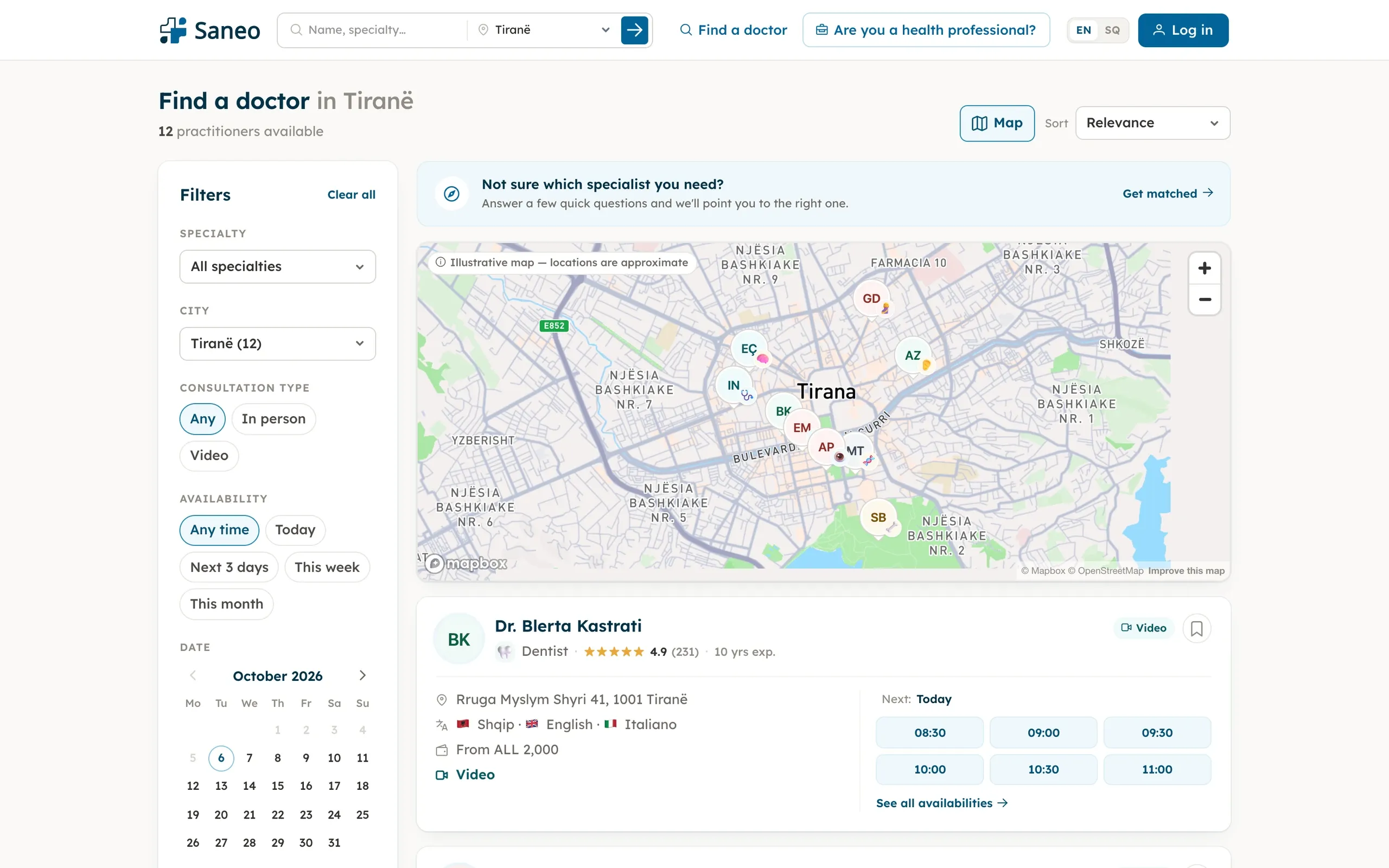
We build web platforms where different kinds of users meet: patients and doctors, players and coaches, agents and clients. Booking, calendars, map search, payments and multilingual pages that search engines index, in one codebase we write end to end.
Where things usually break
- Bookings come in by phone and WhatsApp, and someone copies them into a paper diary or a spreadsheet.
- You need two products in one: a public side for customers and a working side for your staff, with different permissions.
- Your listings are on the website, but people can't filter them by area or see them on a map.
- Your site is in one language, while your customers search in Albanian, Italian and English.
- A ready-made platform takes a cut of every booking and doesn't fit how your business actually schedules work.
What we build
Multi-role portals
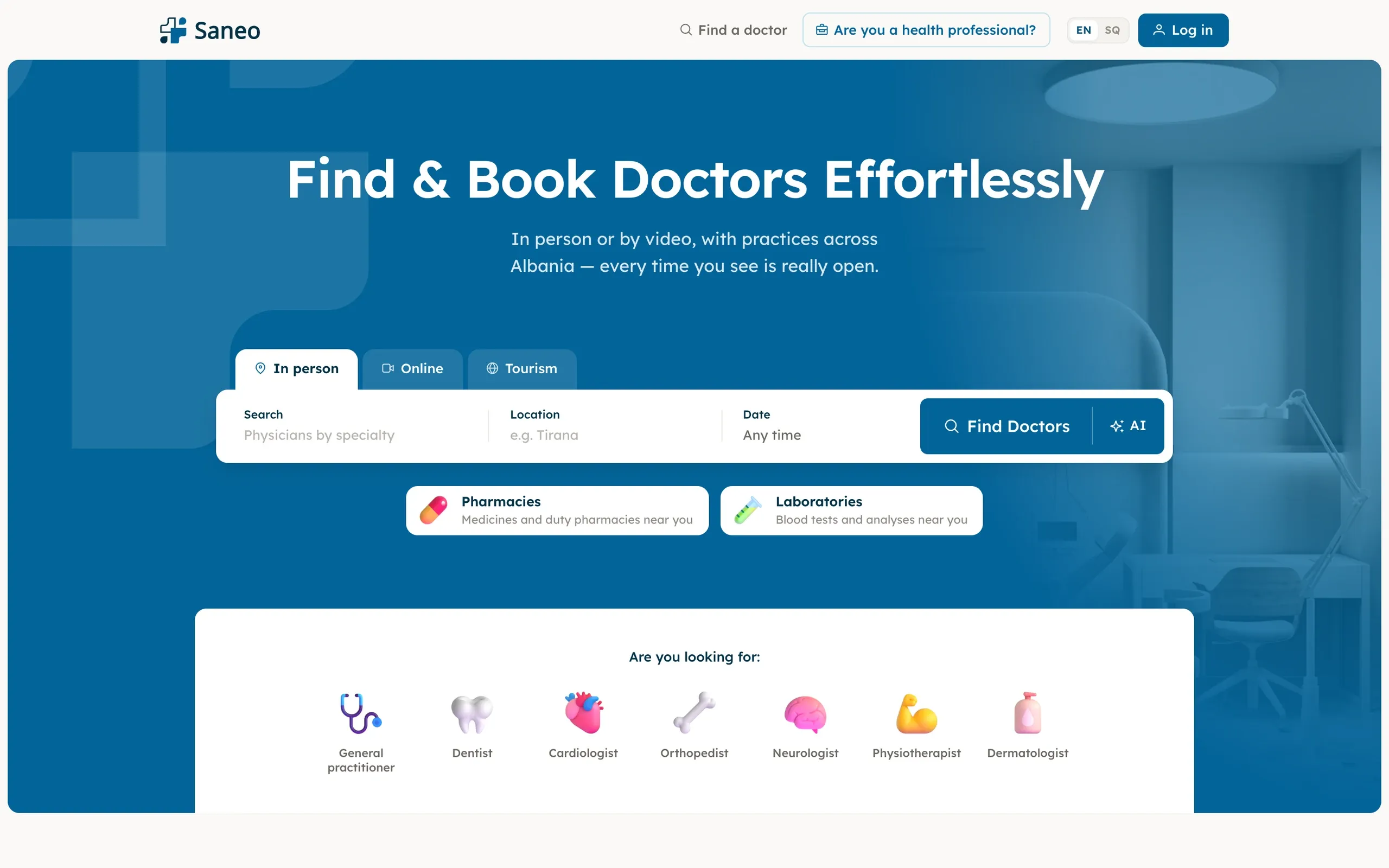
A separate area for each type of user on one database, with role checks on the server. Saneo has a patient side and a doctor workspace, and USA College Sport has a player portal and a coach portal on its own domain.
Online booking and calendars
Free slots computed from opening hours, services and existing appointments, so a slot on screen is actually free. New bookings reach the staff calendar live.
Listings with map search
Filters by area, type and price, with a map that updates the results as you move it. ALProperty uses MapLibre with clustered price pins, a satellite layer and a 3D view.
Payments and plans
Stripe checkout, subscriptions, one-time credits and webhooks that update the account. On CircleOn the server enforces plan limits, credits and refunds.
Server rendering and multilingual SEO
Public pages rendered on the server or pre-rendered, so search engines index every listing, doctor or destination. ALProperty runs in 6 languages, and Pushim.al has a page for each destination and month.
Back office and data imports
The screens your team uses every day: pipelines, approvals, reports. Pushim.al collects offers from agency websites and social posts every day, with no manual entry.
How a project runs
01
Map the roles and flows
We list each type of user and what they need to do, from the first visit to the finished booking or deal. This becomes the data model.
02
Build the core flow first
We build the one path that brings in money or saves time, like search to booking, with real data. You click through it before anything else gets added.
03
Add roles and features in releases
Staff tools, payments, languages and notifications arrive in small releases on a test site you can use. Each one goes live when you approve it.
04
Launch and look after it
We set up hosting, domains, analytics and Search Console, then watch the first real traffic. The code stays in your repository.
Platforms we have built
Four platforms we built end to end: doctor booking in Albania, a real-estate site with its agency CRM, a sports recruiting platform with player and coach portals, and a holiday offer comparison site.
Saneo
Doctor booking for patients and clinics in Albania
Read the case study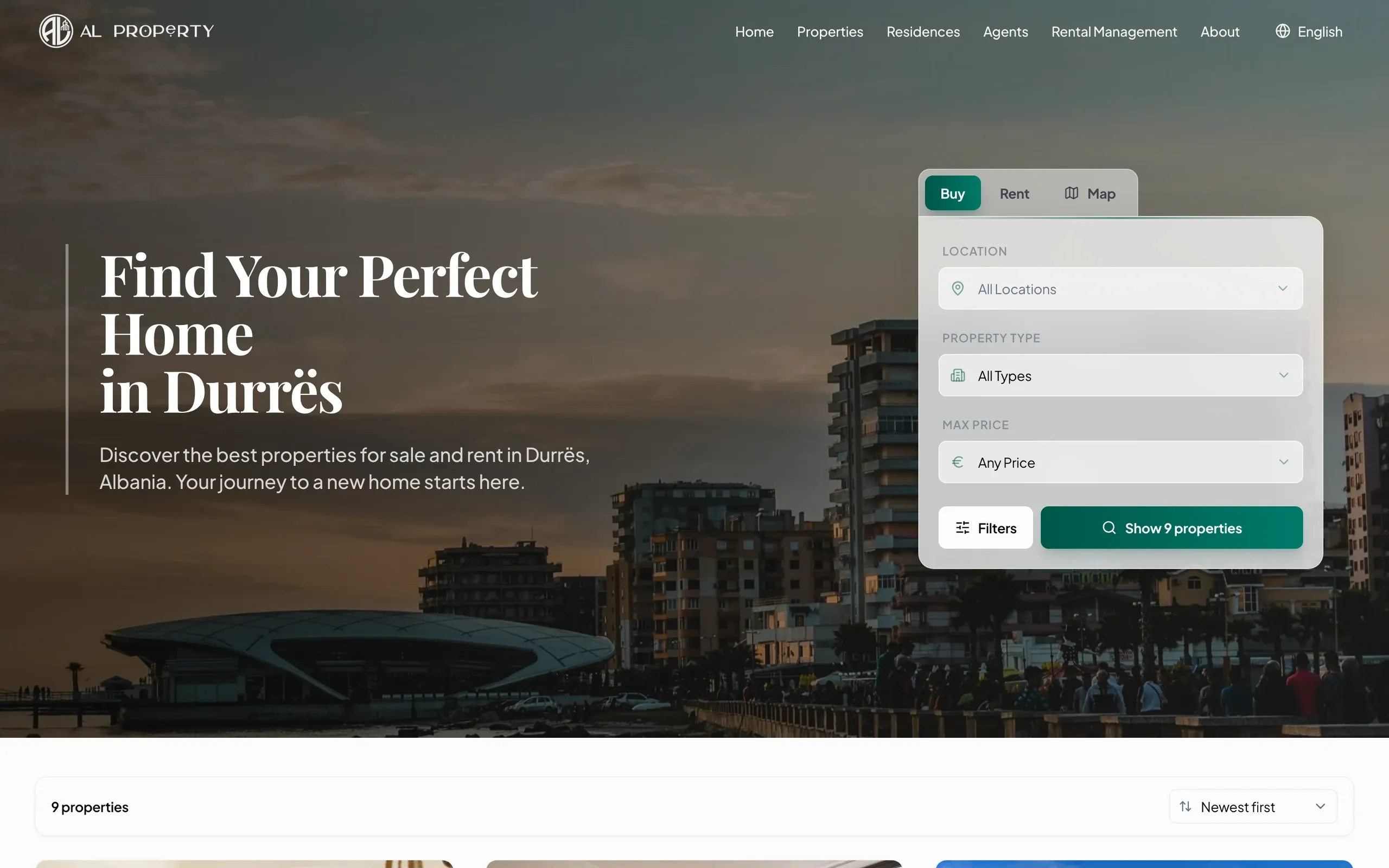
ALProperty
Listings website and agent CRM for a Durrës agency
Read the case study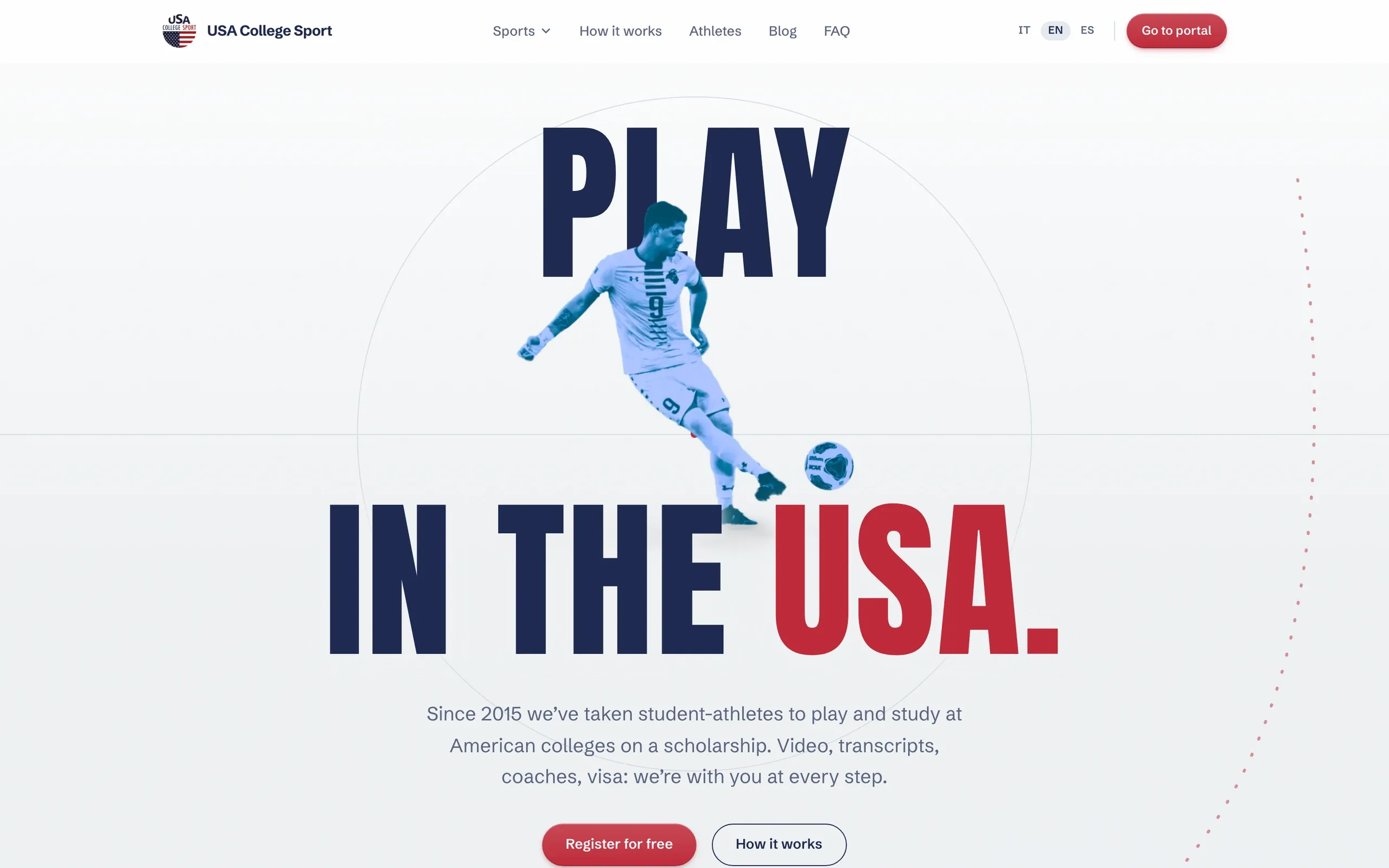
USA College Sport
Recruiting platform for European athletes aiming at US colleges
Read the case study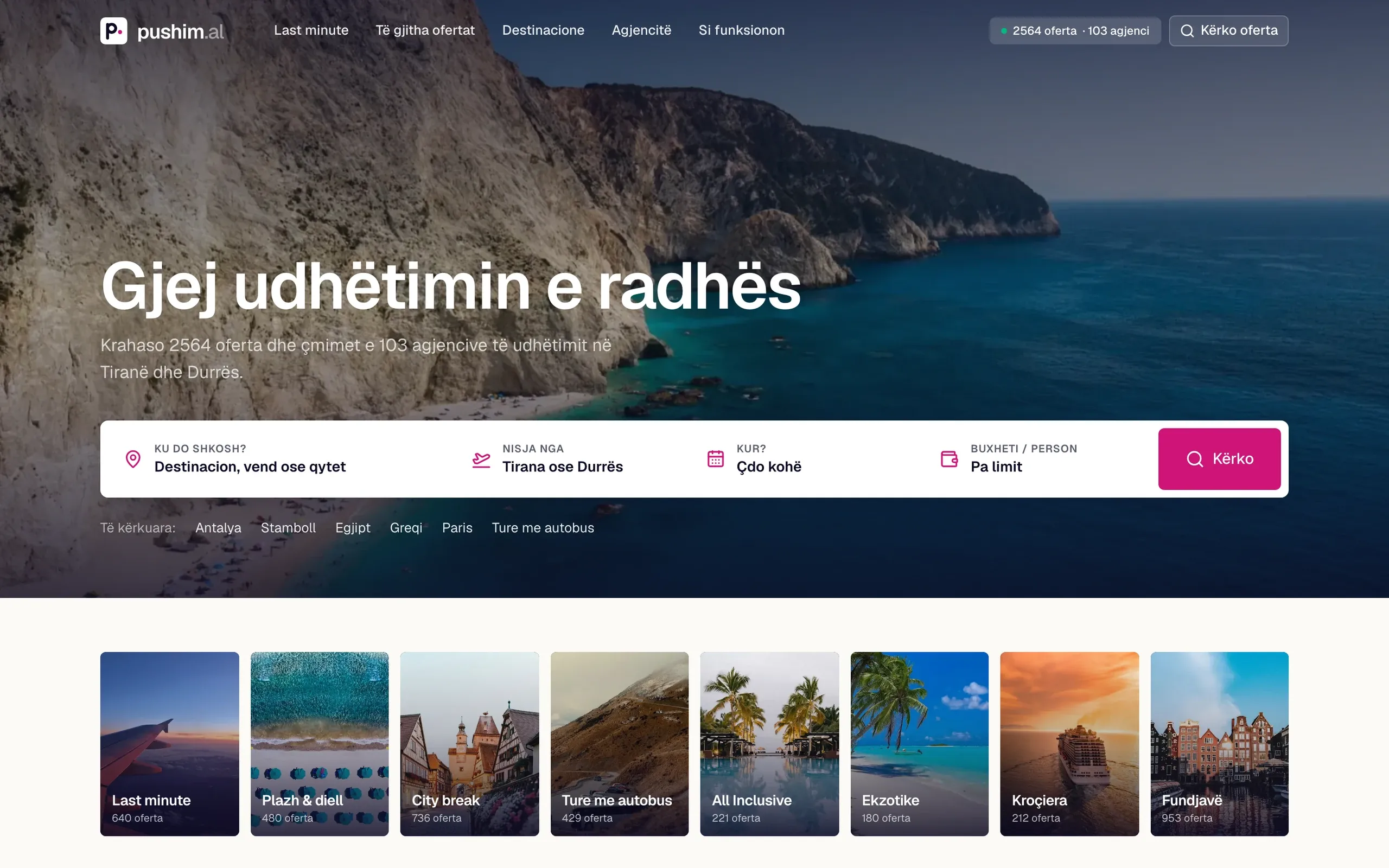
Pushim.al
Holiday offers from Tirana and Durrës agencies, compared
Read the case studyQuestions about web platforms
Can you build a booking system for my business instead of using a ready-made one?
Yes. We build booking around how you really work: your services, opening hours, staff and rules for confirming. Saneo, for example, works for a single doctor and for a clinic with a shared calendar. The system is yours, so no platform takes a commission on each booking.
What is the difference between a website and a web platform?
A website shows information. A platform has accounts, roles and data that change all the time: bookings, listings, messages, payments. That needs a database, permissions and admin tools, which is where we spend most of the work.
Can the platform take payments online?
Yes, usually with Stripe: one-time payments, subscriptions or credits. The server listens to Stripe's webhooks, so an account only changes once the payment is confirmed. For businesses in Albania and Kosovo we first check which payment providers work for your company and your customers.
Will the platform rank on Google in several languages?
We build public pages with server-side rendering or pre-rendering, a separate URL for each language and hreflang tags, so every language can be indexed. Ranking also depends on your content and your competitors, so we don't promise positions.
Which technologies do you use?
Mostly Vue 3 and Nuxt with TypeScript, with Firebase or a TypeScript API on Postgres behind it. We choose based on the data: appointments and patient charts fit Postgres, simpler content fits Firestore. By default everything lives in your own accounts and repository.